Selecting the ideal pool deck texture is key to creating a stylish, practical outdoor retreat. The texture you select impacts the appearance of your pool deck and plays an important role in its safety, comfort, and maintenance.
In Florida, your pool deck faces intense sunlight, frequent rain, and constant exposure to water. A surface that looks attractive when dry may feel slippery when wet or uncomfortable under bare feet. Choosing a finish based on appearance alone can leave you dealing with problems after resurfacing is complete. Whether you're dealing with an existing concrete pool deck or planning a new one, understanding how different textures perform can help you make a better decision.
From broom finishes and exposed aggregate to stamped concrete overlays and spray textures, each option offers a different balance of appearance, comfort, maintenance, and traction.
Understanding Pool Deck Textures
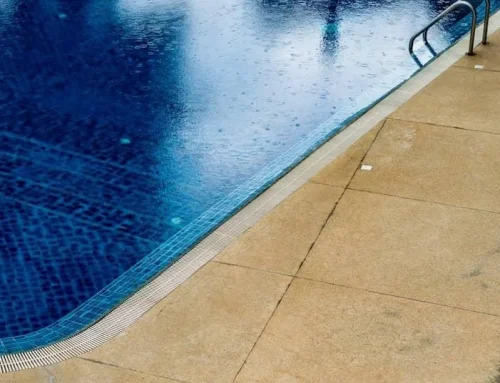
A pool deck texture is more than just a finish; it's a key element that influences your pool area's design and safety. The texture you choose can transform the look and feel of your concrete pool deck, making it more visually appealing and comfortable for bare feet. It also plays an important role in providing traction, especially when water from the swimming pool or Florida's frequent rain makes the surface wet.
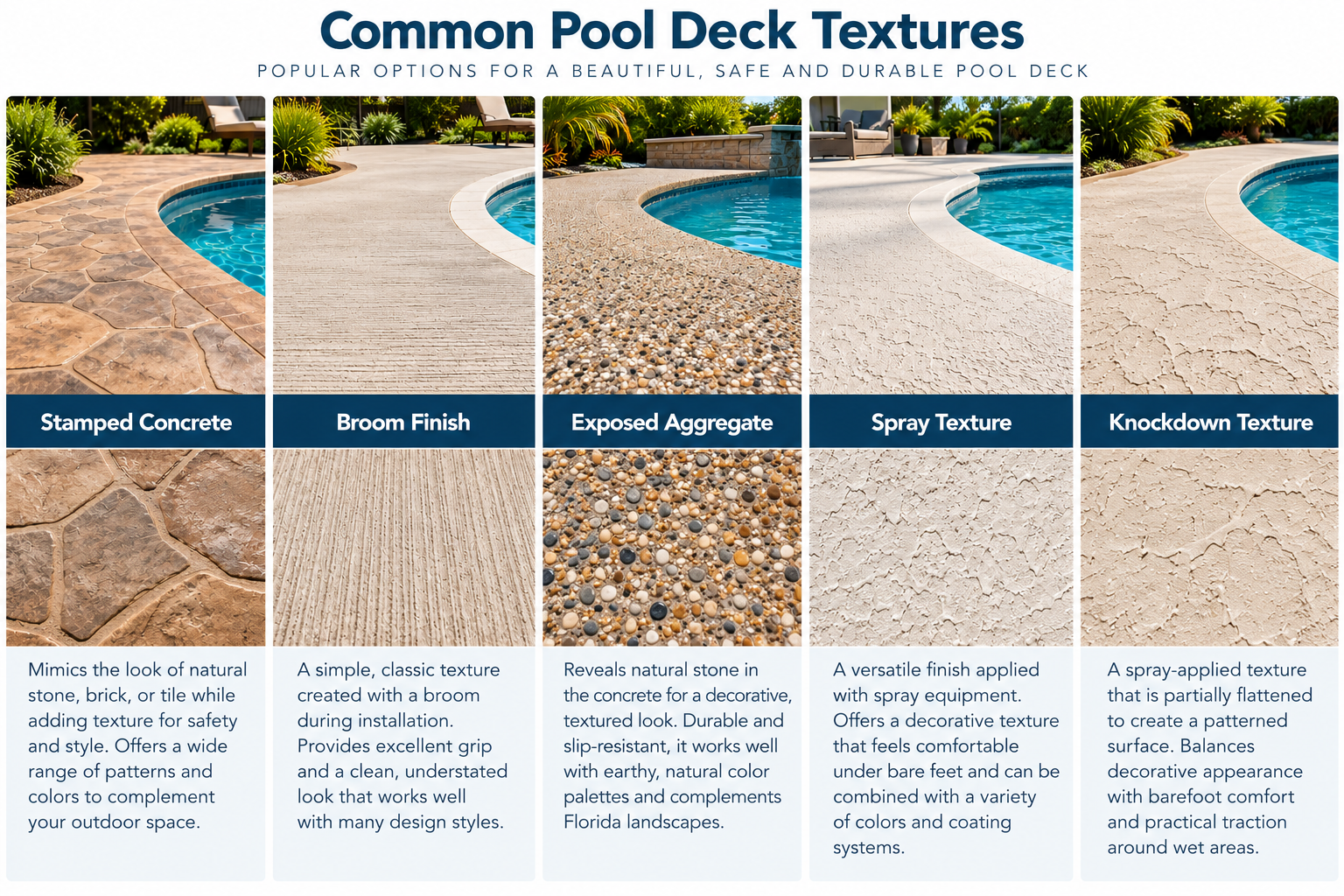
Popular pool deck textures include:
- Stamped Concrete: Imitates natural stone or brick to give your deck an elegant, decorative finish.
- Broom Finish: A simple texture that creates shallow grooves for added traction.
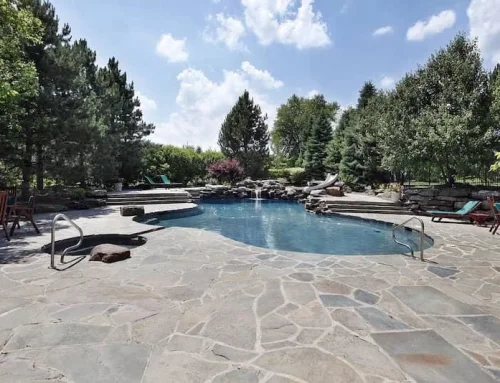
- Exposed Aggregate: Reveals natural stone within the concrete for a decorative, textured appearance.
- Spray Texture: Creates a lightly textured finish commonly used when resurfacing existing concrete pool decks.
- Knockdown Texture: Produces a flattened, patterned surface that can balance barefoot comfort with traction.
The right pool deck texture not only enhances the beauty of your outdoor space but also helps make the surface practical for everyday use. However, no single texture guarantees slip resistance, cooler temperatures, or long-term durability. Those results also depend on the materials, coating system, surface preparation, and installation.
Common Pool Deck Texture Options
When choosing the best texture for your pool deck, consider how each finish looks, feels, and performs around water.
Broom-Finished Concrete
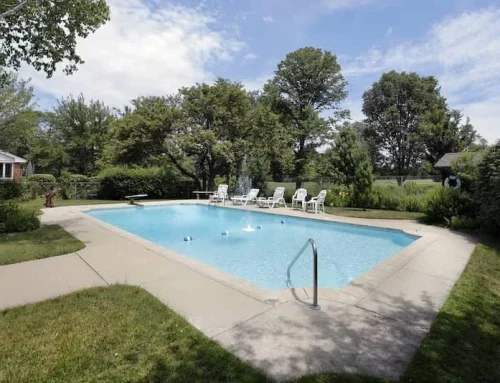
A broom finish is one of the simpler ways to add texture to a concrete pool deck. During installation, a broom is drawn across fresh concrete to create shallow grooves. These grooves provide a textured surface that can improve traction compared with smooth concrete. Broom finishes work well when you prefer a straightforward appearance without elaborate decorative patterns.
However, the depth and direction of the grooves matter. A very rough finish may feel uncomfortable under bare feet, while a finish with minimal texture may not provide enough traction around wet areas.
- Best suited for: New concrete pool decks where practicality and a simple appearance are priorities. For existing concrete, a contractor would need to evaluate whether an overlay or coating can create a similar textured appearance.
Stamped Concrete Overlays
Stamped concrete copies the look of natural stone, brick, or other decorative materials while giving your pool deck a more distinctive appearance. When resurfacing an existing concrete deck, a stamped overlay may allow you to achieve a similar decorative effect without completely replacing the slab. The design options range from natural stone patterns to more structured brick-like finishes, making stamped overlays suitable for different architectural styles.
However, stamped concrete does not automatically create a slip-resistant surface. Some stamped patterns and sealers can become slippery when wet, particularly when the surface has a glossy finish. A contractor should evaluate the pattern depth, sealer, and appropriate traction additives before recommending the system for your pool area.
- Best suited for: Homeowners who want a decorative stone or brick appearance without installing individual pavers.
Exposed Aggregate Finishes
Exposed aggregate reveals natural stone within the concrete surface, creating a decorative and textured appearance. This finish works particularly well when you prefer natural, earthy colors that complement landscaping, stone features, or traditional Florida home designs. The visible stones create visual depth and a distinctive surface pattern.
However, the size and exposure of the aggregate affect how the deck feels under bare feet. Larger or more pronounced stones may feel rough, while smaller aggregate can create a more comfortable walking surface. Cleaning can also require additional attention because dirt and debris may collect around the exposed stones.
- Best suited for: Homeowners who want a natural stone appearance and don't mind a more pronounced texture.
Spray Texture Finishes
Spray texture is another option when resurfacing an existing concrete pool deck. This method involves applying a compatible cementitious or decorative coating through specialized spray equipment. The application creates a patterned texture that can improve the appearance of worn concrete. Spray textures are commonly selected for pool decks because they offer decorative flexibility without requiring a deeply stamped pattern. If you're considering a decorative finish for your existing concrete, explore Coastal Textures to see another pool deck resurfacing option.
Depending on the coating system, the finish may also be combined with lighter colors or reflective formulations designed to help manage surface heat. However, the texture itself does not guarantee that your pool deck will stay cool under direct sunlight. The final temperature depends on several factors, including the coating material, color, sunlight exposure, and surface properties.
- Best suited for: Existing concrete pool decks where you want a decorative resurfacing finish with a relatively subtle texture.
Knockdown Texture Finishes
Knockdown texture is often associated with decorative spray-applied pool deck coatings. After the material is applied, the raised texture is partially flattened to create a patterned surface. This produces a finish that can feel more comfortable under bare feet than some aggressively textured surfaces while still providing surface variation.
The final traction depends on the pattern, coating material, and any sealer used. Knockdown textures are especially useful when you want a pool deck that looks decorative without the deeper impressions found in some stamped finishes.
- Best suited for: Homeowners looking for a balance between decorative appearance, barefoot comfort, and practical maintenance.
How to Choose a Pool Deck Texture for Safety and Comfort
When choosing a pool deck texture, consider both how it looks and how well it performs. A well-chosen texture can improve the comfort and usability of your pool deck. However, different finishes perform differently under Florida's weather conditions.
Slip Resistance Around Wet Pool Areas
Water is unavoidable around swimming pools. Whether someone has just stepped out of the pool or rain has left the deck wet, the surface needs appropriate traction. Textured finishes can help reduce slipping risks, but the amount of traction depends on more than the visible pattern.
You should also consider:
- The depth and spacing of the texture
- The coating or sealer used
- Whether the finish includes traction additives
- How the surface performs when wet
- How algae, dirt, and other buildup may affect traction
A heavily textured surface isn't always the best solution. Excessively rough finishes may cause discomfort or create cleaning challenges. The goal is to choose a surface that provides appropriate wet traction without becoming unpleasant to walk on.
Barefoot Comfort and Surface Heat
Florida's summer sun can make concrete pool decks uncomfortable under bare feet. While texture affects how the surface feels against your skin, it is not the only factor controlling heat.
Surface temperature also depends on:
- Color and solar reflectance
- Coating composition
- Direct sunlight exposure
- Surrounding shade
- Existing concrete conditions
Lighter-colored finishes generally absorb less solar energy than darker finishes with otherwise similar properties. Some exterior pool deck coatings are formulated to improve solar reflectance, but their actual performance varies. A contractor can help you compare available finishes based on both texture and heat-management properties.
Cleaning and Maintenance Requirements
The texture you select also affects how easily you can maintain your pool deck. Smooth or lightly textured surfaces may be easier to clean, but they still need suitable wet traction. Deeply stamped patterns and exposed aggregate can collect dirt in recessed areas. Spray textures and knockdown finishes may provide a practical balance, depending on their surface profile and coating system.
Before choosing a finish, consider how frequently you'll need to remove:
- Leaves and landscaping debris
- Dirt carried by foot traffic
- Pool chemical residue
- Algae or mildew buildup
- Standing water and other moisture-related deposits
Regular cleaning and proper drainage help preserve the appearance and performance of your pool deck.
The Relationship Between Texture and Color
When it comes to your pool deck, the texture you choose has a major impact on how colors are perceived. Different pool deck textures can alter the appearance of your chosen color. Some textures might make colors appear richer and more defined, while others can soften their appearance, creating a more subtle look. Understanding this relationship is important to creating a pool deck that is both visually appealing and functional.
How Texture Affects Color Perception
Textures like stamped concrete can give colors a more pronounced, defined look, while a broom finish may scatter reflected light and make colors appear softer. Exposed aggregate brings out the natural appearance of the stones within the concrete surface, allowing their colors to blend with the surrounding design. The coating finish, lighting, and surface profile also influence the final appearance.
Complementing Colors With Texture
To achieve the best results:
- Stamped Concrete: Works well with earth tones and contrasting shades that highlight decorative patterns.
- Broom Finish: Complements lighter, more muted colors for a simple appearance.
- Exposed Aggregate: Works well with natural, earthy color palettes.
- Spray and Knockdown Textures: Offer flexibility with neutral colors, grays, and other decorative finishes.
Choosing the right combination of texture and color helps your pool deck complement the surrounding outdoor space. For a more detailed discussion of color selection, see our guide to pool deck colors on what works and why.
Choosing the Best Texture for Your Pool Deck
The right pool deck texture is essential for creating a beautiful and functional outdoor space. The texture you choose should not only complement your pool deck's color but also align with your overall pool design and home architecture. Whether you're working with an existing pool deck or starting fresh, the right texture can enhance both the appearance and everyday usability of your pool area.
Matching Texture With Pool Design
When choosing a texture, consider how it blends with your pool deck coating and your home's architectural style:
- For modern designs, a subtle spray texture or knockdown finish in a neutral color may work well.
- Rustic settings may benefit from exposed aggregate or stamped concrete that resembles natural stone.
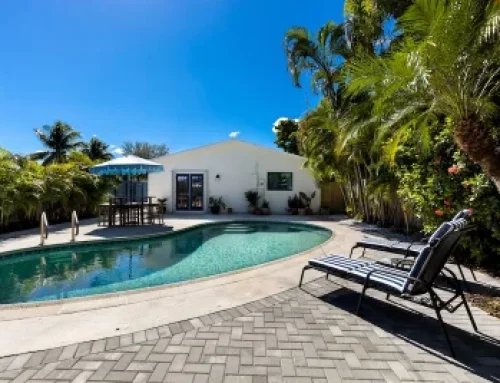
- Traditional Florida homes often pair well with sand-colored finishes, light earth tones, and decorative concrete patterns.
However, appearance shouldn't be the only deciding factor. The existing condition of your concrete may determine which textures and coating systems are practical.
Which Pool Deck Texture Works Best for Existing Concrete?
If your existing concrete pool deck is structurally sound, resurfacing may allow you to change its texture without removing the entire slab. Spray-applied coatings, compatible decorative overlays, and certain textured coating systems can provide new finishes over properly prepared concrete.
However, not every deck is suitable for resurfacing. Before applying a new texture, a contractor should inspect the surface for:
- Cracks and signs of movement
- Loose or deteriorating concrete
- Existing coatings that may interfere with adhesion
- Drainage problems
- Moisture-related issues
- Surface contamination
A new textured coating cannot correct significant structural movement or underlying moisture problems. If your deck has serious deterioration, those conditions may need to be addressed before resurfacing can proceed. This is particularly important in Florida, where frequent rain, high humidity, and moisture exposure can affect coating performance.
Common Mistakes When Choosing Pool Deck Textures
Choosing a texture based only on photographs or showroom samples can lead to disappointing results. A finish that looks attractive in a small sample may feel very different across an entire pool deck. Here are several mistakes worth avoiding:
- Choosing Appearance Over Wet Traction: Decorative stamped patterns and smooth-looking coatings may complement your home, but you still need to consider how they perform when wet. Ask your contractor about the intended surface profile and whether the complete coating system is suitable for wet pool deck areas.
- Assuming Every Textured Coating Stays Cool: Some textured pool deck finishes are marketed for comfort in hot weather. However, texture alone does not determine surface temperature. You should evaluate the coating formulation, color, and expected sunlight exposure rather than relying on appearance or marketing descriptions.
- Ignoring Existing Concrete Problems: Applying a new texture over damaged concrete may temporarily improve its appearance without resolving the underlying issue. Cracks, poor drainage, weak concrete, or trapped moisture can affect the performance of the new surface. Proper evaluation and preparation should come before selecting the decorative finish.
- Choosing a Texture That Is Difficult to Maintain: Deep grooves and rough surfaces may collect dirt and debris. If your pool deck is surrounded by trees or landscaping, consider how easily you can clean the finish. The best texture should suit both your design preferences and the amount of maintenance you're prepared to handle.
Ensure a Stunning Pool Deck With Professional Guidance
The perfect pool deck texture creates an inviting and functional pool area. You can transform your outdoor space by carefully choosing a texture that complements your color choice while meeting your needs for comfort, traction, and maintenance. Whether you're exploring pool deck resurfacing ideas or planning a complete renovation, pairing the right texture with the perfect color can transform your pool deck.
Before selecting a finish, an experienced contractor can evaluate your existing concrete, discuss suitable coating systems, and explain which texture options fit your project.
What to Ask Before Choosing a Pool Deck Finish
When discussing your pool project with a contractor, ask:
- Which texture systems are suitable for the existing concrete?
- How will the selected finish perform around water?
- What preparation or crack repairs are required?
- How will the texture feel under bare feet?
- What cleaning and maintenance will the finish require?
- Does the quote include preparation, repairs, materials, and labor?
Every pool deck has its own challenges, from existing cracks to worn coatings and drainage problems. A detailed quote should explain the recommended system and the work needed before installation.
For the best results, consider seeking expert advice from professionals like Creative Resurfacing Solutions. Their experience in pool deck resurfacing can help you choose a finish that matches your design goals and the conditions of your property. Contact Creative Resurfacing Solutions to discuss suitable pool deck textures and resurfacing options for your Florida home.