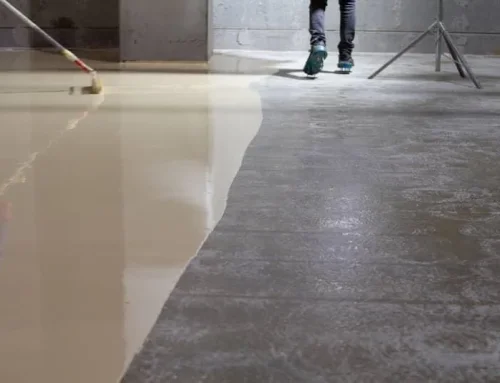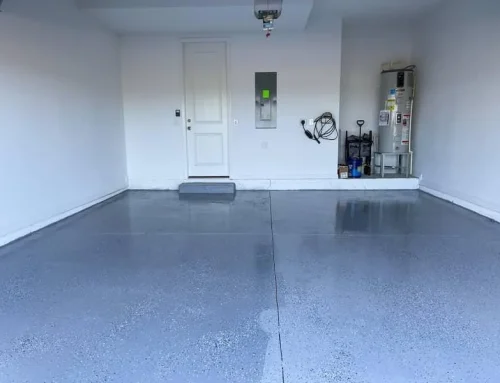
Your garage floor takes more abuse than you might realize. Hot tires, tracked-in sand, oil drips, and everyday foot traffic can leave bare concrete looking worn long before the rest of your home needs attention.
A floor coating can change that. But choosing the right one in Florida takes more than picking a color or a shiny finish.
Heat, humidity, and moisture beneath your concrete can affect how well a coating bonds and how long it lasts. Even a great-looking floor can develop problems when the wrong materials are used, or the slab isn’t prepared correctly.
This epoxy flooring guide walks you through how these coatings work, where they perform best, what can go wrong, and how to choose a system that fits your home. You’ll also learn when epoxy makes sense and when another coating may be the better option.
What Is Epoxy Flooring?
Epoxy flooring is a protective coating system made by combining a resin with a hardener. Once the two parts are mixed, they react and form a tough layer that bonds to a concrete surface.
Unlike ordinary floor paint, properly installed epoxy coatings form a thicker protective layer designed to handle everyday use.
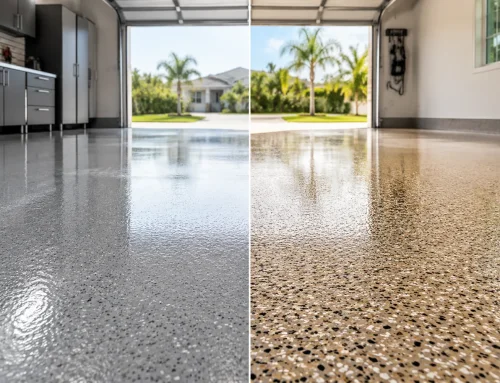
You can choose from several finishes, including solid colors, decorative flakes, and systems with a glossy finish. Some create a clean, polished appearance, while others add texture for better traction.
The coating can also make an unfinished garage floor feel more like part of your home.
However, not every epoxy product performs the same way. The quality of the materials, the condition of the slab, and the installation method all affect the final result.
A good coating starts with good concrete underneath.
Where Does Epoxy Flooring Work Best?
Epoxy works best on stable, properly prepared concrete floors where the coating matches the way you use the area.
You may see it in residential and commercial spaces, but the demands of each location can be quite different.
Garage Floors
Your garage is one of the most practical places to consider epoxy.
A suitable system can help protect the floor from tire marks, common automotive spills, and everyday wear. It also makes sweeping away sand and dirt easier than cleaning rough, unfinished concrete.
If you use your garage for parking, storage, or weekend projects, the right finish can improve both its function and appearance.
Workshops and Utility Areas
Workshops often deal with dropped tools, tracked-in debris, and occasional chemicals.
Epoxy can offer useful scratch resistance and protection against many everyday substances. Still, heavy impacts can chip the coating, and chemical resistance varies by product.
For busy work areas, choose a system based on what the floor will actually face.
Interior Concrete Floors
Epoxy can also give indoor floors a smooth, sleek appearance.
Its broad design options make it possible to create a modern finish in various spaces, including some utility rooms and finished interior areas.
You should consider traction, comfort, and how the finish will look alongside the rest of your house.
Covered Outdoor Areas
A covered patio or similar area may be suitable for certain coating systems, but sun exposure still matters.
Even indirect UV light can affect some epoxy products. Outdoor areas may also need extra slip resistance because rainwater can reach the floor.
Before coating an exterior slab, make sure the selected system is approved for that exposure.
Benefits of Epoxy Flooring for Florida Homes
The biggest advantage of epoxy is that it can make concrete easier to live with while improving its appearance.
A well-installed floor offers several practical benefits:
- Easier maintenance: Its finished surface is generally easier to sweep and mop than bare concrete.
- Spill protection: Many systems resist common automotive fluids and household stains when spills are cleaned promptly.
- Decorative flexibility: Colors, flakes, and finish options help you achieve your desired look.
- Reduced surface dust: A continuous coating can help contain the fine dust often released by unfinished concrete.
- Everyday durability: The right system can withstand normal foot traffic and vehicle use.
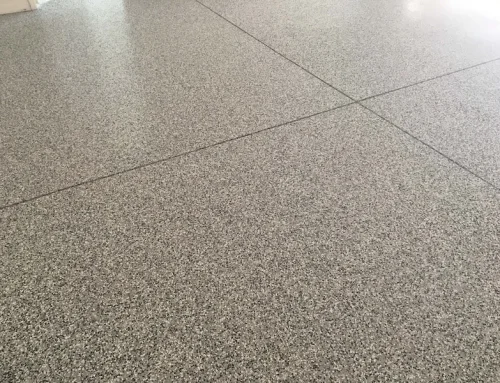
Some decorative systems combine colored flakes with a clear topcoat. This can create a more textured finish while helping hide minor visual differences in the slab.
However, claims of unmatched durability deserve a closer look.
No coating is immune to damage. Sharp impacts, dragging heavy objects, or ongoing slab movement can still cause scratches, chips, or other problems.
The real benefit is choosing a durable finish that fits your daily routine, rather than expecting a floor that never needs care.
Epoxy Flooring Guide to Florida’s Climate Challenges
Florida’s climate can affect epoxy before, during, and after installation. Heat, humidity, rain, and sunlight all deserve attention.
Your slab’s condition often matters more than how attractive the finished coating looks.
Heat and Humidity
Florida garages can become hot, especially during summer afternoons.
Temperature and humidity affect how coating materials are handled and how the curing process develops. Conditions outside the manufacturer’s recommended range may lead to installation problems.
High humidity can also increase the risk of condensation forming on the concrete.
A professional should check both the slab and surrounding conditions before beginning work.
Moisture Beneath the Concrete
A floor can look completely dry while still allowing water vapor to move through the slab.
That moisture can interfere with adhesion, causing bubbles, blistering, or peeling over time.
This is especially worth checking in Florida, where heavy rain, groundwater conditions, and older slabs can create moisture concerns.
Moisture testing should be part of the evaluation when slab conditions indicate a risk. The installer can then determine whether the concrete is suitable or needs a compatible moisture-control system.
Trapped moisture may also contribute to conditions that support mold growth where moisture and organic material are present.
For a closer explanation, read Can Mold Grow Under an Epoxy Floor?.
UV Exposure and Yellowing
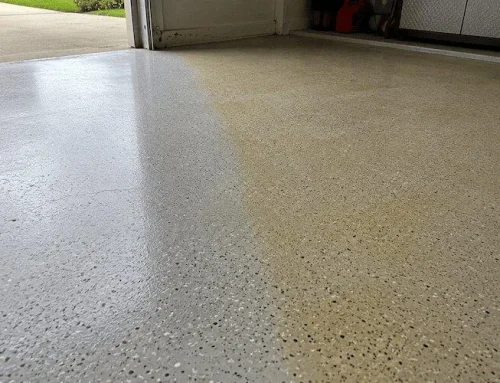
Standard epoxy formulations can discolor after prolonged exposure to sunlight. You may notice this near an open garage door or in areas receiving direct afternoon sun. The change can be more obvious on light-colored finishes.
UV-stable finishing systems may help, but their performance depends on the actual products used. Our article on why epoxy floors turn yellow explains the causes and what you can do about them.
Surface Preparation
Proper surface preparation is one of the strongest predictors of coating performance.
Before applying anything, the installer needs to evaluate the concrete for oil, existing sealers, weak areas, and other contaminants.
Mechanical grinding is often used to create a suitable surface profile for bonding. It can be more reliable than acid etching for many professional systems.
The concrete must also meet the coating manufacturer’s moisture and surface-condition requirements.
Skipping preparation can turn a promising flooring project into an expensive repair.
How Long Does an Epoxy Floor Last in Florida?
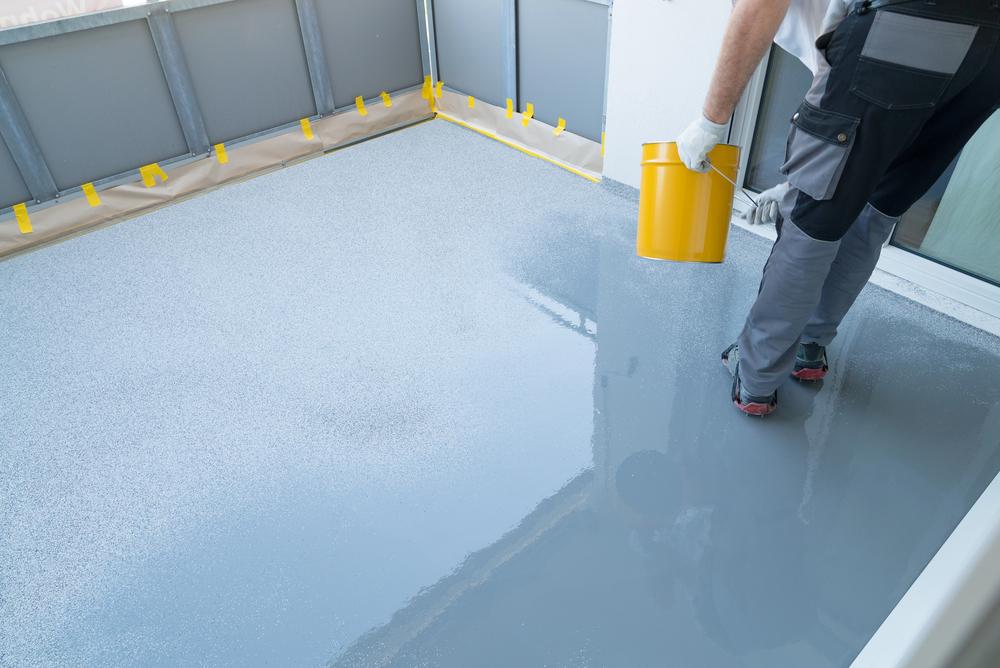
A properly installed epoxy floor can last for many years, but there isn’t one lifespan that fits every Florida home.
Some well-maintained systems may reach 10 to 20 years under suitable conditions. Others can fail much sooner because of moisture, poor preparation, heavy use, or an unsuitable product.
Your floor’s lifespan depends on several factors:
- Concrete condition: Stable slabs provide a better foundation.
- Traffic: Frequent vehicle movement creates more wear than occasional foot traffic.
- Sun exposure: UV light can affect certain finishes.
- Maintenance: Grit, harsh cleaners, and neglected damage can shorten service life.
- Installation quality: Correct preparation and application help the coating perform as intended.
The first few years can reveal whether the system was properly matched to your concrete.
Our guide to epoxy floors after 2 years explains which changes deserve attention.
For a longer view, explore what an epoxy floor looks like after 5 years.
These comparisons can help you set realistic expectations before making an informed decision.
Common Epoxy Flooring Problems and Why They Happen
Even attractive epoxy floors can develop problems. Most failures have an underlying cause that needs attention before another coating is applied.
Peeling or Delamination
Peeling happens when the coating loses its bond with the concrete.
Poor preparation, trapped moisture, or contamination may be responsible. Simply applying another layer over loose material rarely solves the problem.
Bubbling or Blistering
Small bubbles may form because of air escaping from the concrete, application conditions, or moisture-related pressure.
A few surface imperfections are different from widespread blistering. If you notice raised areas spreading across the floor, the cause should be investigated.
Cracks Showing Through
Epoxy doesn’t stop concrete from moving.
Existing cracks may return through a coating if the underlying movement continues. Some cracks can be repaired before installation, but structural problems need separate evaluation.
Yellowing or Fading
Sunlight can change the color of certain epoxy formulations. A compatible UV-stable finishing system may reduce this risk, particularly near garage entrances.
Uneven Finish or Premature Wear
Incorrect mixing, poor application, or failure to achieve a uniform thickness can leave weak spots.
Installing epoxy requires precision. Each product has specific mixing, application, and curing requirements that should be followed.
Epoxy Garage Floor Mistakes to Avoid
Many flooring problems begin before the coating reaches the slab.
You can reduce the risk by watching for these common mistakes:
- Skipping moisture checks. A visually dry slab isn’t proof that moisture vapor won’t cause problems.
- Coating over damaged concrete. Weak or damaged concrete may need repairs before coating.
- Ignoring oil and old sealers. These can interfere with adhesion.
- Choosing the wrong product. A coating designed for indoor use may not tolerate strong UV exposure.
- Using the floor too soon. Walking on a coating before it fully cures can damage the finish.
If you’re comparing contractors or considering a DIY project, our article on epoxy garage floor mistakes covers these issues in greater detail.
Epoxy vs. Polyaspartic Flooring: What’s the Difference?
Epoxy and polyaspartic systems can both protect concrete, but they have different application and performance characteristics.
Polyaspartic coatings are often considered for Florida garages because many formulations offer faster return-to-service times and better UV stability.
Here’s how they generally compare:
| Factor | Epoxy | Polyaspartic |
| Cure time | Usually longer | Often faster |
| UV stability | Varies; standard formulations can yellow | Generally better |
| Application time | Often more working time | Often less working time |
| Appearance | Multiple colors and finishes | Multiple colors and finishes |
| Moisture concerns | Requires suitable slab conditions | Also requires suitable slab conditions |
| Price | Depends on system | Often higher material cost |
Neither option automatically fixes a moisture problem or weak concrete.
The best choice depends on your slab, budget, traffic, and how quickly you need to use the area again.
For a more detailed comparison, read Polyaspartic vs. Epoxy: Which Holds Up Better in Florida?.
What Does Professional Epoxy Floor Installation Involve?
Professional installation involves much more than spreading a coating across your floor.
A reliable process usually follows these stages.
1. Inspect the Existing Concrete
The installer checks for cracks, old coatings, weak areas, and signs of moisture. This helps determine whether the slab is ready for treatment.
2. Prepare the Surface
Grinding and thorough cleaning remove weak surface material and help create the correct profile. Oil, debris, and other contaminants must be addressed before application.
3. Repair Damage
Suitable cracks and small surface defects are repaired with compatible materials. Major slab movement or structural damage may require additional work.
4. Apply the Coating System
Depending on the product, installation may involve a primer, base coat, decorative flakes, and protective topcoat. Each layer must be applied according to the manufacturer’s specifications.
5. Allow Proper Curing
Some epoxy systems need roughly 24 to 72 hours for certain stages of return to service, while full chemical cure may take longer.
Actual timing varies by product and conditions.
Don’t assume the floor is ready for vehicle traffic just because it feels dry. Follow the specific curing instructions provided for your system.
How to Maintain an Epoxy Floor
Most epoxy floors are relatively easy to care for, but regular cleaning helps preserve their finish.
You don’t need an elaborate routine.
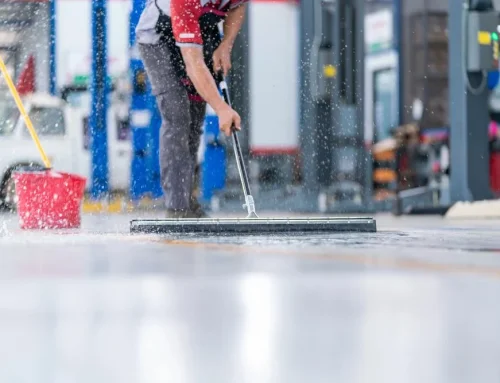
Sweep away sand and grit before they scratch the coating. For routine mopping, use water and compatible mild detergents recommended by the installer.
Clean automotive fluids and other spills promptly rather than allowing them to sit.
Avoid abrasive pads and cleaning products that could damage the finish. If you’re unsure whether a chemical is safe, check the coating manufacturer’s instructions first.
Inspect areas near tires, workbenches, and entrances for early signs of damage.
You may eventually need repairs or a renewed topcoat, depending on the coating’s condition and the system used. Recoating isn’t automatically required every few years.
A little routine care can help you maintain the floor’s appearance without unnecessary expense.
When Epoxy May Not Be the Right Choice
Epoxy isn’t the best answer for every slab.
If your concrete has persistent moisture problems, major structural movement, or significant deterioration, applying a coating without correcting those issues can lead to early failure.
Direct sunlight is another concern, particularly with standard epoxy products that lack appropriate UV protection.
You should also think about how quickly you need the area back in use. Some epoxy systems require longer curing periods than faster-setting alternatives.
For outdoor walkways or areas that frequently become wet, traction deserves special attention. A very smooth coating may become slippery without suitable texture.
In these situations, a different coating or concrete repair approach may be more practical.
The objective is to get a flooring solution that works with your concrete, not force a product onto a slab that isn’t ready.
How to Pick the Right Garage Floor Coating for Your Florida Home
The right coating starts with how you use your space.
A garage in Orlando used mainly for parking may have different needs from a coastal property where salt air, windblown sand, and moisture are regular concerns.
Before committing, ask yourself:
- Does your concrete show moisture problems or existing damage?
- Will sunlight reach the floor regularly?
- How much vehicle and foot traffic will it handle?
- Do you prefer a solid color or decorative finish?
- Will you need added traction?
- How quickly must the floor return to service?
- What level of maintenance fits your routine?
Your budget matters, too.
The initial cost of epoxy depends on the floor’s size, condition, preparation needs, materials, and installation complexity. A lower quote may not include the same repairs or coating layers as a more complete proposal.
Ask contractors for a written scope that explains preparation, moisture assessment, products, curing requirements, and warranty terms.
Check relevant credentials, insurance, recent project examples, and customer feedback before hiring.
This epoxy flooring guide should help you compare more than the finished appearance. You want a system that fits your concrete and holds up under real use.
Professional Garage Floor Coating Options in Florida
Once you understand the benefits and limits of epoxy, the next step is finding a system suited to your property.
A professionally selected coating can transform a worn garage into a more finished, usable area. But the result depends on the slab, preparation, and the materials chosen.
Creative Resurfacing Solutions offers garage flooring options for Florida homeowners who want to improve their existing concrete.
Explore the company’s garage floor coating options to learn more about its Rapid Garage system.
Rather than choosing based on appearance alone, ask which coating system best matches your floor’s condition, exposure, and everyday demands.
Is Epoxy Flooring Right for Your Home?
The best floor isn’t necessarily the one with the shiniest finish or the lowest installation price. It’s the one that suits your concrete, handles your daily routine, and remains practical to care for.
Use this epoxy flooring guide as a starting point for evaluating your options, especially if your Florida garage faces humidity, moisture, or regular vehicle traffic.
Creative Resurfacing Solutions is a local Florida concrete resurfacing and coating specialist that can help you explore professional garage flooring options.
If you’re ready to improve your garage, explore Rapid Garage and contact Creative Resurfacing Solutions to discuss the condition of your concrete and the finish you want to achieve.
Frequently Asked Questions
Is epoxy flooring good for Florida garages?
Yes, epoxy can be a practical choice for Florida garages when the concrete is suitable, and the system is installed correctly. Moisture, humidity, and UV exposure should be considered before choosing the coating.
How long does epoxy flooring last in Florida?
A well-installed system may last 10 to 20 years under favorable conditions, but actual lifespan varies. Heavy traffic, poor preparation, moisture, and sunlight can shorten its service life.
Can Florida humidity damage epoxy flooring?
High humidity can affect application and curing conditions. Moisture moving through the concrete slab can also cause adhesion problems, which is why the slab should be evaluated before installation.
Does epoxy flooring get slippery when wet?
Smooth epoxy finishes can become slippery when wet. Decorative flakes and compatible textured additives can improve traction, although no finish completely eliminates slipping risks.
Can epoxy be applied over cracked concrete?
Some cracks can be repaired before coating. However, epoxy won’t stop ongoing structural movement, so the cause and severity of the cracking should be evaluated first.
Does epoxy flooring increase home value?
An attractive, well-maintained garage floor may improve buyer appeal, but a specific increase in property value isn’t guaranteed. Its practical condition and overall presentation matter more than the coating alone.
Is epoxy flooring difficult to maintain?
No. Most epoxy floors need regular sweeping, occasional mopping, and prompt spill cleanup. Using compatible cleaners and avoiding abrasive tools can help preserve the finish.