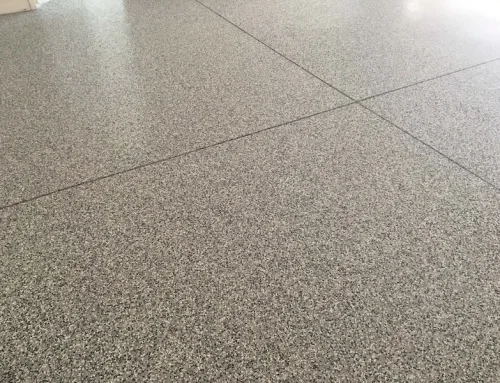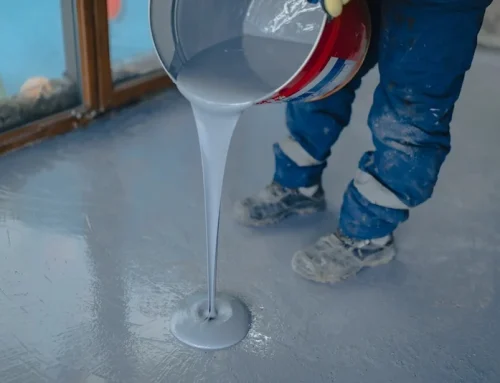
If you are comparing coatings for a Florida garage, you are probably trying to avoid one expensive mistake: paying for a floor that looks great at first and starts showing problems far too soon. The hard part is that both systems can look clean, glossy, and tough on installation day.
The better question is which system fits your slab, sunlight, traffic, moisture, and downtime. In a real polyaspartic vs epoxy decision, those details matter more than a dramatic strength claim.
Why You End Up Comparing Coating Systems
You usually start this search because you want a durable floor without signing up for constant touch-ups or another major home improvement project a few years from now. Your garage floor takes more abuse than most indoor surfaces, especially when heat, rain, sand, and vehicle use all meet in one place.
A freshly coated concrete floor can hide differences at first. Trouble often shows later near the door, under turning tires, or where moisture moves through the slab.
Premature peeling, yellowing, or loss of gloss can mean another costly installation. That is why polyaspartic vs epoxy needs a practical answer, not a one-line winner.
Quick Answer: Which Holds Up Better in Florida?
For the exposed wear layer, a quality polyaspartic floor coating usually has an edge where UV resistance, abrasion resistance, chemical resistance, and rapid curing matter. A well-chosen epoxy product can still make sense in certain build or base coat roles.
So polyaspartic vs epoxy is often the wrong way to frame the whole system. You may get better performance from a layered design in which each material does the job it handles best.
If sunlight concerns you, see why epoxy floors can turn yellow. Yellowing is not structural failure, but it can become obvious where direct sunlight hits only part of the floor.
Why Florida Is Hard on Garage Floor Coatings
Florida throws a lot at a floor all at once. Think intense UV exposure, warm tires, wet cars, abrasive sand, and tons of humidity when you’re laying it down. At the end of the day, even the highest-grade premium finish can’t make up for bad concrete, surface contamination, or underlying slab moisture.
The key is knowing which stress is affecting the exposed finish and which one starts underneath it.
UV Exposure Can Change More Than the Floor’s Gloss
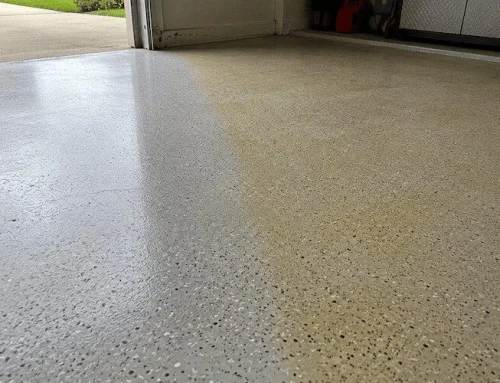
Standard epoxy coatings can amber or turn yellow after prolonged exposure to ultraviolet light. In a Florida garage, you may notice the change first within the few feet closest to an open door while the shaded section farther inside keeps its original tone.
That shift does not automatically mean failure. It shows why the exposed layer matters in hard afternoon sun.
Aliphatic polyaspartic coatings are commonly formulated for strong UV resistance and color retention. That can make them a better fit for the exposed wear layer of a Florida garage, especially where direct sunlight regularly reaches the floor.
Hot Tires, Sand, and Daily Garage Traffic Create Mechanical Wear
Your floor does not wear evenly. Tire paths, turning points, workbench areas, and the strip near the garage opening usually see the most daily wear.
Florida sand acts like grit under shoes and tires. Add hot tires, dropped tools, and repeated vehicle traffic, and the finish works hard.
A polyaspartic finish is often chosen where abrasion and tire-mark resistance matter. Still, hardness alone does not determine how well the floor will perform if the concrete underneath was poorly prepared.
You want a system that stays attached to the slab, not simply one that sounds tough on paper.
Humidity and Warm Slabs Affect the Installation Window Too
Fast cure can be a major benefit, but it also gives the crew less time to work. That matters on a hot Florida day.
Polyaspartic products generally have a shorter working window than many epoxy products, and warm conditions can make that window even tighter. In a Florida garage, that puts more pressure on mixing, rolling, broadcast timing, and edge work.
For you, fast does not mean careless. Mixing, rolling, broadcast, and edge work must stay controlled. That is one reason professional installation matters with fast-curing systems.
A short installation window can be useful, but only if your crew knows how to manage it.
Moisture Below the Coating Can Defeat Either Material
A coating can resist spills from above and still have trouble with moisture coming from below. Those are two different problems.
If vapor moves through the slab, the bond at the concrete surface may be stressed. Drainage, prior repairs, and moisture levels can change the prep plan.
A polyaspartic product does not make moisture irrelevant, and resin alone is not always to blame when a substrate was never properly prepped.
Your material choice should come after the slab is understood, not before.
Florida Garage Coatings: polyaspartic vs epoxy at a Glance
You do not need a 20-point scorecard. You need the differences that can change your buying decision.
|
Factor |
Epoxy-based option |
Polyaspartic-based option |
|
UV exposure |
More likely to amber when left exposed |
Usually better color and UV stability |
|
Working time |
Often longer |
Usually shorter and more temperature-sensitive |
|
Cure speed |
Slower |
Faster return-to-service potential |
|
Abrasion |
Good with the right system |
Often selected for high-wear finish coats |
|
Chemicals |
Product-specific |
Many professional products offer broad resistance |
|
Best role |
Often useful for build or base layers |
Often useful as a protective wear or top layer |
|
Installation |
More forgiving in some applications |
Requires tight timing and experienced application |
A high-quality epoxy can outperform a weak consumer product, and polyaspartic formulas vary too. What matters is the complete system and your garage conditions.
Where Polyaspartic Has an Edge in Florida
For many Florida garages, polyaspartic earns its strongest case through UV performance, abrasion resistance, chemical exposure, and shorter downtime.
A quality polyaspartic floor can make sense when you cannot leave the space empty for days. Some professional products allow foot traffic within hours under specified conditions, though full cure takes longer.
That quicker return can matter when your garage is your main entrance, storage area, or daily parking space.
Florida Garages With Direct Afternoon Sun Benefit Most From the UV Advantage
If your garage faces west or south, the first few feet inside may take hard sun while the back stays shaded. A finish with strong color stability and UV resistance gives you a better chance of keeping the floor uniform.
Review what an epoxy floor can look like after five years to separate normal wear from possible exposure or installation problems.
The more sunlight your finished layer sees, the more weight UV performance should carry in your decision.
Where Epoxy Still Makes Sense
Epoxy isn’t automatically the cheap or outdated choice. When you go with a professional-grade epoxy resin, you get incredible adhesion, solid build thickness, and crucial extra working time, depending on how it’s formulated.
That longer working window can help during some base or broadcast stages, while another chemistry may serve as the protective top coat.
The polyaspartic vs epoxy debate gets distorted when a big box store kit is compared with a professional system. Compare complete systems, not labels.
Cost definitely belongs in the conversation, but it shouldn’t be the sole deciding factor. A lower quote always looks great on paper, until you realize the prep, repairs, finish coats, or warranty coverage aren’t even comparable.
You are buying the finished system, not a bucket of resin. Better prep can raise the upfront price while reducing the chance that you pay again for grinding, removal, and recoating.
For a high-use garage, that long-term value can matter more than saving a small amount on installation day.
The Comparison Most Homeowners Miss: Topcoat vs Complete Coating System
A finished garage surface may contain several layers, and each layer has a different job. The layer touching the slab needs sound preparation and reliable bonding.
A build layer may carry decorative flakes. The exposed wear layer handles tires, sun, abrasion, spills, and cleaning.
You do not always have to choose a single chemistry from the bottom to the top. Manufacturer systems often pair different resin types by function.
Ask what each layer is supposed to do. That tells you more than a simple stronger claim.
Polyaspartic and Epoxy for Different Florida Concrete Surfaces
Your best option changes with exposure. A shaded garage has different needs from a lanai or fully exposed slab.
Garage Floors
On a residential garage floor, focus on tire traffic, sunlight at the door, automotive fluids, cleaning needs, and how quickly you need the space back.
If your floor receives steady sun and heavy use, a UV-resistant wear layer becomes more valuable. If the slab has moisture or bond concerns, preparation may matter more than the finish chemistry.
Your priorities should follow the way you actually use the space.
Covered Patios and Lanai
A covered patio still gets wind-driven rain, pool water, partial sun, and sharp temperature changes. Slip resistance matters too.
A garage product does not automatically belong outdoors; the system must fit the exposure.
You want the material selected for the conditions it will face every week, not for where it happens to be popular.
Fully Exposed Outdoor Concrete
Outdoor slabs face strong sun, torrential rain, standing-water risks, and, near the coast, salt air.
Choose a system for outdoor applications, while checking drainage and slab movement before work begins.
Full exposure raises the stakes because the finish has fewer breaks from moisture and sunlight. Your coating recommendation should reflect that.
How to Choose a Garage Coating for Florida Conditions
Your choice gets easier when you stop shopping by product name and ask how the floor will be built.
Start with the slab: old coatings, cracks, contamination, weak areas, and moisture can change the plan. Then consider sunlight, parking habits, workshop use, stored chemicals, and acceptable installation time.
Ask what touches the concrete and what forms the wear layer. Find out how the surface will be prepared, how repairs are handled, when moisture testing is needed, and when vehicles can return.
Then read the warranty. Check exclusions for UV discoloration, delamination, moisture, cracks, substrate movement, chemical damage, normal wear, and exterior exposure.
A long warranty headline matters less than what is actually covered.
That process gives you a more informed decision than any universal polyaspartic vs epoxy verdict.
What a Florida Polyaspartic Installation Needs to Get Right
A fast system still starts with careful preparation. The crew should evaluate the slab, mechanically profile it, address suitable defects, and control application timing.
Many professional jobs use industrial-grade diamond grinders to create a consistent profile instead of relying on quick cleaning. Once resin is mixed, heat and humidity can shorten the window, so the professional team must coordinate rolling, broadcast, edges, and recoating.
If the surface preparation is weak, fast cure only locks in the problem faster.
What Can Make Either Floor Fail Earlier Than Expected?
Even an expensive system can fail early due to poor profiling, contamination, weak concrete, moisture, bad mixing, or traffic returned too soon.
Using a product outside its intended exposure can also cause trouble. How epoxy floors age over several years can help you separate expected aging from warning signs.
The key point is simple: good chemistry cannot rescue bad preparation.
You should expect the installer to explain the substrate and the system before asking you to choose a finish.
Epoxy or Polyaspartic? Have Your Florida Garage Evaluated Before Choosing
By now, you can see why polyaspartic vs epoxy is not a contest with one answer for every home. Your slab, sun exposure, traffic, moisture, desired finish, and downtime all shape the right system.
Creative Resurfacing Solutions can evaluate those conditions before you commit. You can review the slab, how the garage is used, and which system fits the demands your property actually sees.
If fast return to service and strong UV performance fit, explore Rapid Garage polyaspartic flooring. The goal is a floor that makes sense for your Florida home and holds up in daily life.
Frequently Asked Questions
Is polyaspartic better than epoxy for a Florida garage?
For an exposed wear layer, polyaspartic often has an advantage where sunlight, abrasion, and faster cure matter. Your final result still depends on the formulation, slab condition, prep, and complete system design.
Does epoxy always turn yellow in Florida?
No. UV exposure is the main concern, and the amount of change depends on the product, sun exposure, color, and protective layers.
How quickly can a polyaspartic garage floor be used?
Some professional polyaspartic products allow foot traffic within hours, but vehicle return and full cure are product-specific. Heat, humidity, and slab temperature affect the schedule.
Can polyaspartic be installed over an existing epoxy floor?
Sometimes, but only after the existing system is checked for adhesion, contamination, damage, and compatibility. Covering a failing layer does not fix the reason it failed.
Is a full polyaspartic floor better than an epoxy-and-polyaspartic system?
Not automatically. Different layers can be selected for different jobs, so you should judge the full specification, preparation method, and exposure needs rather than the name of one resin.