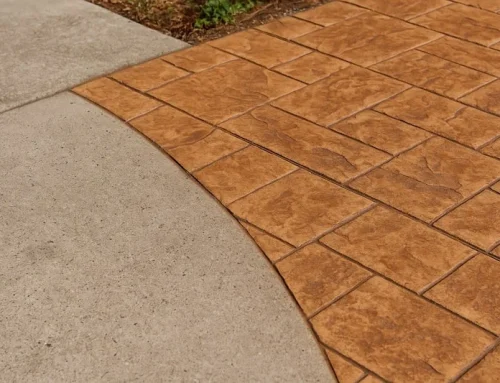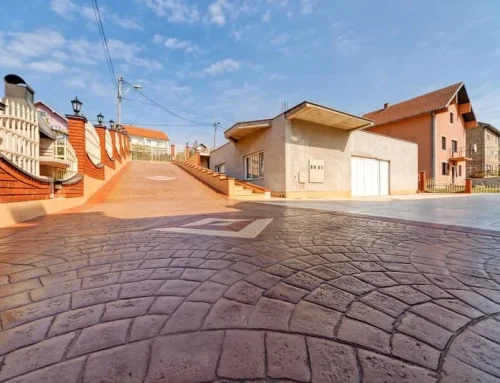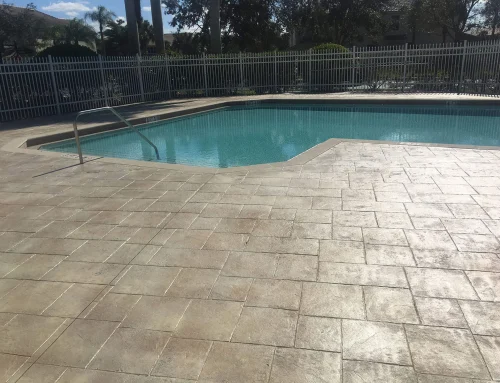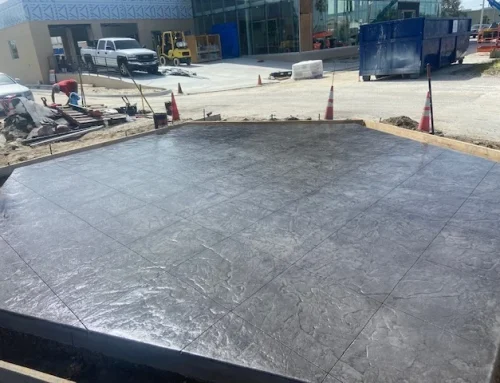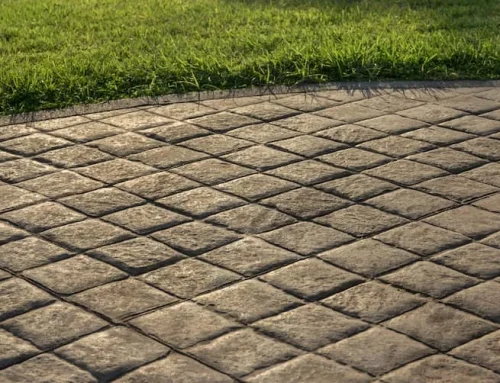
Most people think a stamped surface is just a thin layer you stamp and forget about. Looks clean on day one, holds up for years. That’s the expectation.
Then a few months pass. Small cracks show up. Some spots start to sound hollow when you walk on them.
In Florida, the weather does not just test an installation. It tries to break it. Heat, humidity, and sudden downpours push every weak spot to the surface. A thin overlay does not last long in that kind of cycle.
Here’s the part that gets overlooked. Stamped concrete overlay thickness sounds like a small detail, but it controls how well everything holds together. Too thin, and it wears out fast. Too thick, and it struggles to bond to the existing concrete.
If you are working with an existing concrete surface, this matters even more. The right depth is what keeps the finish solid over time.
What Is the Standard Thickness for a Stamped Concrete Overlay?
Generally speaking, a stamped concrete overlay sits between 1/4 inch to 3/8 inch thick. That might sound thin, but there is a reason for it.
This type of concrete overlay is not meant to act like a full concrete slab. It is a bonded layer that transforms the existing surface into a new finish. The strength comes from adhesion, not just thickness.
Most stamped concrete overlays use polymer-modified concrete. That helps the overlay material bond tightly to the existing concrete slab while still allowing slight movement.
Here is where the detail matters.
Many stamping mats, especially deeper stone or slate patterns, need close to 3/8 inch of material just to form proper grout lines. If the layer is too thin, the stamp hits the old surface underneath. The result looks faint and unfinished, almost like a cheap imprint instead of a clean pattern.
A thin concrete overlay works when the depth is controlled. Tools like a gauge rake help spread the overlay mix evenly before using stamping tools.
Why Thickness Matters More in Florida Conditions
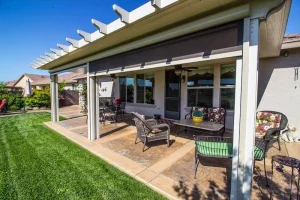
Florida is tough on exterior concrete surfaces. You see it on pool decks, patios, and even driveway areas.
The cycle is constant. Heat expands the concrete. Rain soaks it. Then the sun dries it again. That movement never really stops.
If the stamped concrete overlay is too thin, it cannot handle that stress. Cracks show early. The texture wears down faster. If it is too thick, moisture can get trapped between the overlay and the existing concrete slab, which weakens the bond.
Common issues you will notice:
-
- Hairline cracks are forming early.
-
- Hollow spots underfoot
-
- Sections lifted from the existing surface.
There is another detail many people miss. Expansion joints.
If a concrete contractor installs a stampable overlay over an existing joint and does not cut it back through, it will crack there. Not maybe. It will happen. That joint is designed to move, and the overlay has to respect it.
Most failures trace back to the same root problems behind why concrete resurfacing fails. Thickness plays a role, but it has to work with the conditions.
When a Thicker Overlay Makes Sense (And When It Doesn’t)
There are situations where going slightly thicker helps. But it needs to stay controlled.
A stampable concrete overlay can go thicker when:
-
- There are minor low spots in the existing concrete slab.
-
- The old concrete has light surface wear.
-
- You need a more even base for the desired finish.
For example, older patios or sidewalks often need a bit more material to smooth things out before adding integral colors and stamping patterns like brick, stone, or cobblestone.
But here is where mistakes happen.
Thicker does not mean stronger.
If the overlay is applied too thickly:
-
- It becomes heavier and harder to bond.
-
- It increases the chance of separation.
-
- It may develop stress cracks over time.
This is especially risky in driveway areas or commercial projects where weight and traffic are higher.
The goal is balance. Enough depth to correct the surface, but not so much that it works against the bond.
The Real Issue Isn’t Thickness, It’s Surface Preparation
This is where most projects succeed or fail.
You can get the correct depth right and still have problems if the surface preparation is not done properly. The stamped concrete overlay depends entirely on how well it bonds to the existing concrete.
A proper prep process usually includes:
-
- Mechanical grinding to open up the concrete surface
-
- Removing dirt, oil, and old sealers
-
- Repairing large cracks before applying any overlay products
-
- Making sure the existing surface is clean and ready
The overlay is only as strong as what it sticks to.
Skipping prep leads to peeling, weak spots, and early failure. Many assume the overlay material is the issue, but it usually comes down to the base.
Proper surface prep, like grinding the concrete, is what allows the overlay mix to bond and stay in place.
Once the base is ready, the stamped concrete process becomes reliable. Whether you want a wood texture, cut stone, or tile look, the finish holds better and lasts longer.
What Happens When the Overlay Is Too Thin or Too Thick
This is where things become obvious over time.
The “Goldilocks” Zone for Overlays
|
Scenario |
The Risk |
|
Too Thin under 1/4 inch |
Faint stamping, fast wear, surface cracks, and poor durability |
|
Just Right 1/4 to 3/8 inch |
Strong bond, clear pattern depth, and long-lasting finish |
|
Too Thick over 1/2 inch |
Shrinkage cracks, hollow spots, and bond failure |
You can usually spot the issue early.
If the layer is too thin:
-
- The texture fades quickly.
-
- The existing concrete surface starts to show through.
-
- High traffic areas wear unevenly
If the layer is too thick:
-
- The bond weakens
-
- Moisture gets trapped underneath.
-
- Sections may lift or sound hollow.
A good stamped overlay sits right in that middle range. Enough material to take a clean stamp. Not so much that it creates stress.
Is a Stamped Overlay the Right Choice for Your Space?
A stamped overlay works best when the base is solid and structurally sound.
Good fits include:
-
- Patios
-
- Pool decks
-
- Sidewalks
-
- Light-use driveway areas
It is a cost-effective way to upgrade decorative concrete without removing the entire slab. Many homeowners look into ways to stamp existing concrete instead of starting from scratch. You can add color, create a wide range of patterns like stone brick, slate, or tile, and completely refresh exterior surfaces.
But it is not right for every project.
It may not work well if:
-
- The existing concrete has major structural damage.
-
- There are deep cracks or shifting in the ground.
-
- The base is unstable.
In those cases, full replacement may be the better option. A good concrete contractor will check the existing surface first before recommending a stampable overlay.
Getting the Thickness Right Is Only Half the Job
A stamped concrete overlay can look great when done right. Clean lines. Strong texture. A finish that holds up through Florida weather.
But most failures do not come from the material. They come from early decisions. Wrong thickness. Poor prep. Ignored joints.
That is why getting the depth right is only part of the process.
At Creative Resurfacing Solutions, the approach stays simple. Start with a solid base. Use the right overlay mix. Follow proper prep. Apply the stamped concrete overlay with control so it bonds and lasts.
Because fixing a failed surface later always costs more than doing it right the first time.