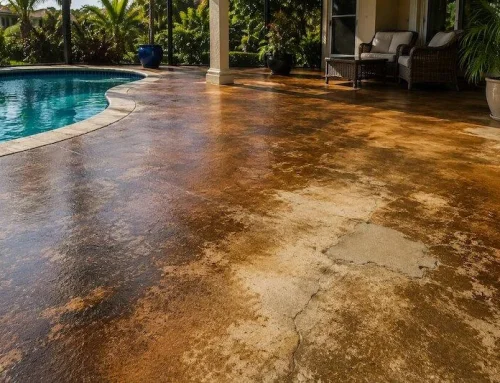
In Florida, your concrete is basically a giant sponge sitting in a sauna. Most homeowners think a quick bag of mix from the hardware store will hide those ugly stains, but standard concrete resurfacing often fails fast here because it can’t handle the physics of the Gulf or the Atlantic. Between the 95-degree bake and the sudden afternoon downpours, the slab is constantly expanding and gasping for air.
Whether it’s salt exposure near the coast or trapped moisture inland across Tampa, Clearwater, and West Palm Beach, the rules are just different here. If you follow some generic DIY video filmed in Ohio, you’re setting yourself up for a mess. This guide covers what actually sticks when the humidity hits 90%.
What Florida Homeowners Should Expect From Concrete Resurfacing
Florida concrete resurfacing isn’t just about aesthetics. It’s a fight against hydrostatic pressure. Up north, the concern is freezing ground. Here, it’s moisture vapor trapped beneath the slab, constantly trying to escape through the surface.
What it fixes: Surface scaling, light pitting, and that worn-out gray look.
What it won’t: Deep structural cracks caused by Florida’s sandy, shifting soil. If the ground is moving under a home in Tampa or Clearwater, a thin overlay won’t stop it.
The Salt Factor: In Clearwater, salt air works its way into concrete pores. If that contamination isn’t addressed first, bonding problems follow.
The Rain Reality: In West Palm Beach, rain-heavy seasons leave slabs saturated for long stretches. Without a breathable system, finishes can delaminate or bubble under pressure.
Understanding this upfront changes every resurfacing decision that follows.
Why the Traditional 1-2-3 Concrete Mix Struggles in Florida
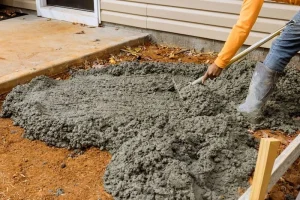
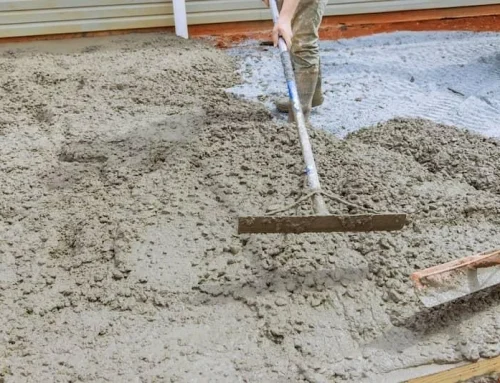
The “1/2/3 rule” is the old-school formula for resurfacing concrete: 1 part cement, 2 parts sand, and 3 parts aggregate. It’s a common base mix for a basic driveway or walkway, but in Florida, this rigid recipe often doesn’t hold up under real conditions.
In Clearwater, the ground is sandy and prone to movement. A traditional 1/2/3 mix is too brittle. It doesn’t flex when the soil shifts, which leads to damaged concrete sooner than most homeowners expect. In Tampa, many homes sit on older slabs with mixed soil conditions that trap moisture underneath. When high humidity builds, that water vapor pushes upward, stressing the new surface until cracking or delamination starts. For long-term durability in these coastal areas, standard mixes usually need polymer additives to survive Florida’s expansion and contraction cycles.
When a Skim Coat Works on Existing Concrete in Florida
A skim coat can work on existing concrete, but only when surface preparation is done correctly. In Florida, resurfacing with a thin concrete overlay is a popular, cost-effective way to cover stains and minor cracks, but the environment here is unforgiving.
In West Palm Beach, moisture vapor transmission is a constant challenge. If the existing surface isn’t properly prepared and sealed, trapped vapor can break the bond and push the concrete coating loose.
In Clearwater, salt creates a different problem. Salt air settles into the pores of existing concrete, forming a residue that prevents a new overlay from bonding. Without professional-grade cleaning and testing, pool deck or patio projects often peel as moisture or salt contamination undermines adhesion. To ensure long-term performance, the first step is always neutralizing surface contaminants and verifying moisture conditions before any coating goes down.
Can You Pour Self-Leveling Concrete Over Old Concrete in Florida Homes?
Self-leveling compounds offer a smooth, liquid-to-solid solution for indoor floors, but Florida’s moisture levels make this tricky. In Tampa, these products perform beautifully in a garage or enclosed sunroom, provided you aren’t fighting a high water table.
The secret isn’t the pour. It’s the moisture test. In West Palm Beach, moisture trapped in the ground can create enough pressure to delaminate the new material. Without a high-quality primer acting as a vapor barrier, the resurfacing compound will bubble and flake. Skipping surface preparation is the fastest way to turn a quick project into a full replacement. To avoid underlying issues, a professional contractor will ensure the concrete surface is properly dried and primed before the pour, ensuring your concrete floors stay level for the life of the home.
What Is the Best Material to Resurface Concrete With in Florida?
Choosing the right concrete resurfacing options depends on where the sun hits and how much rain falls. For long-term protection, match the material to the local environment:
-
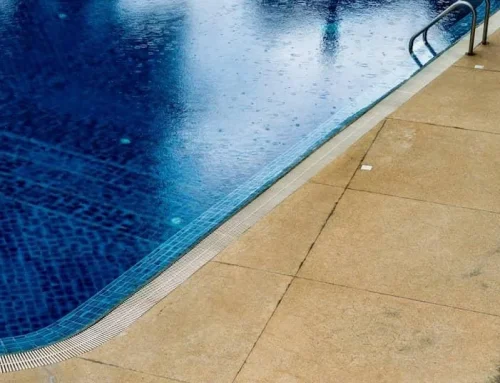
- Pool Decks & Patios: In Clearwater, stamped concrete overlays or microtoppings are ideal for outdoor decks. They stay cool under bare feet and provide better traction than slippery paint or tile.
-
- Garages: For Tampa homeowners, epoxy coatings or polyaspartic resins are the gold standard for a durable, attractive finish that resists dirt and hot-tire pickup.
-
- High-Sun Areas: In West Palm Beach, decorative concrete with UV-resistant sealers prevents fading.
Whether you want the look of brick, flagstone, or smooth modern texture, resurfacing is a cost-effective way to boost property value. Instead of a full replacement, a high-quality concrete overlay provides the longevity and maintenance ease Florida families need.
When Concrete Resurfacing Is a Bad Idea for Florida Properties
Sometimes, concrete resurfacing is just an expensive band-aid. If your concrete driveway has deep, active cracks that change width with the seasons, the ground underneath is likely unstable. In Tampa’s older neighborhoods, shifting slabs often indicate subgrade washouts that no concrete restoration can fix.
Another dealbreaker is severe moisture vapor transmission. In coastal Clearwater and West Palm Beach, if water is constantly wicking up through the slab, it often causes new finishes to fail prematurely. When the cost of specialized vapor barriers exceeds the concrete resurfacing cost of a fresh pour, a full replacement is the smarter financial move. If your slab is crumbling into gravel or spalling due to rusted rebar, stop looking at coatings and start looking at a jackhammer.
Choosing a Concrete Resurfacing Approach That Works in Florida
Successful concrete resurfacing in the Sunshine State isn’t about the prettiest patterns or the lowest square foot price. It’s about respecting the climate. You need a material that breathes, a contractor who prioritizes surface preparation, and a realistic plan for long-term performance.
By choosing concrete restoration over replacement, you save money and time, provided the underlying issues are addressed first. Whether you’re refreshing a salt-worn pool deck or a stained garage floor, the right decorative concrete choice adds real property value and durability. For homeowners who want it done right the first time, Creative Resurfacing Solutions provides expert service across West Palm Beach, Tampa, and Clearwater.